


CBSE STEM Teacher Training 2026: What Delhi's New STEM Centres Mean for Inclusive Schools
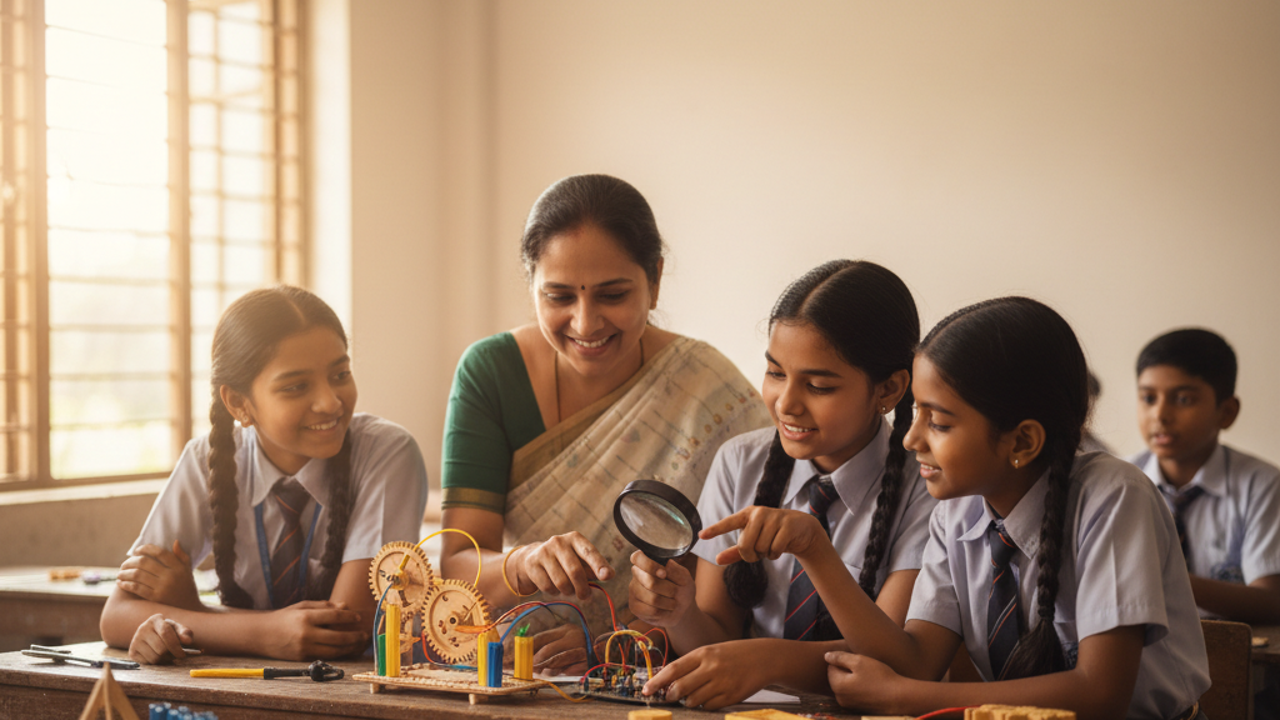
CBSE naming STEM education as its headline teacher training theme for 2025-26 — and opening three new STEM Centres in Delhi — marks a turning point for Indian schools. But inclusive classrooms cannot afford to be left behind. This article explains what the policy shift means, where the inclusion gap lies, and how ProGame Tactile Plus can help schools make STEM genuinely accessible for students with visual impairments. When CBSE designated STEM education as its headline teacher training theme for 2025-26 and inaugurated three new STEM Centres in Delhi, it sent a clear signal to every school in India: skilling is no longer optional. But for the thousands of students with visual impairments enrolled in both special and mainstream schools, the more urgent question is whether this STEM momentum will reach them — or leave them behind once again. The answer depends, in large part, on whether school leaders and inclusion planners choose tools built from the ground up for accessibility.
What CBSE's STEM Teacher Training Push Actually Means for Schools in 2026
CBSE's designation of STEM as its central teacher training theme for 2025-26 is far from a routine administrative update. The simultaneous inauguration of three STEM Centres in North West Delhi government schools signals that institutional infrastructure is being built at pace. This moves in direct step with NEP 2020's mandate for computational thinking from Class 6 onwards, and CBSE's newly confirmed requirement of 100 hours per year of Computational Thinking and AI for Classes 6–8 from academic year 2026-27 — as outlined in CBSE curriculum guidelines. The practical implication is significant: teacher capacity is being developed at scale across India. But capacity alone is not enough if the tools teachers are trained on serve only a portion of their classroom. Every STEM professional development programme deserves to be examined against one honest question — does this tool work for every learner, including students with visual impairments? How we answer that question will define whether 2026 becomes a genuine turning point or a missed opportunity. For a deeper look at what this means for inclusive classrooms, see [what inclusive teacher professional development in STEM coding labs should look like in 2026](https://www.nextskills360.in/blog/teacher-professional-development-in-stem-coding-labs-for-inclusive-classrooms-20).
India's Inclusion Gap in STEM: The Numbers Schools Cannot Ignore
The scale of India's school system makes both its ambition and its gaps visible. According to UDISE+ 2024-25 data published by the Ministry of Education, India has 14.7 lakh schools and 24.8 crore school students — one of the largest school education systems in the world. Against that backdrop, the inclusion numbers are stark. According to UDISE+ 2023-24, only 57% of India's schools have working computers and only 54% have internet connectivity, meaning device-dependent STEM tools are already inaccessible for nearly half of all schools. For students with visual impairments, the challenge compounds further: most mainstream coding tools offer no screen-reader compatibility, no audio-first interface, and no accessible navigation. Next Skills 360, founded in 2020 and headquartered in Hyderabad, has impacted 500+ students with disabilities through its inclusive skilling programmes — a figure that reflects precisely how under-served this segment remains nationally. These numbers are not an argument against CBSE's STEM ambition. They are the structural case for why inclusive STEM tools must be embedded from the start, not retrofitted after rollout. Explore more at [what inclusive STEM education for government schools in India should look like in 2026](https://www.nextskills360.in/blog/inclusive-stem-education-for-government-schools-india-2026).
Why Most STEM Coding Tools Fail Students with Visual Impairments
The majority of coding tools in use across Indian STEM labs share a common design assumption: the learner can see the screen. Visual drag-and-drop interfaces, colour-coded block environments, and cursor-dependent navigation are standard features — and every one of them is a barrier for a student with a visual impairment. Without audio feedback, screen-reader compatibility, and keyboard-navigable interfaces, these tools become unusable without sighted assistance, which defeats the purpose of independent skilling. The problem is not a lack of good intentions; it is a lack of accessibility-first engineering. Designing for inclusion requires deliberate, specialist work — it cannot be added as an afterthought. ProGame Tactile, the parent programme of ProGame Tactile Plus, is described by Next Skills 360 as India's first audio-first skilling super app for students with visual impairments — fully screen-reader friendly, with no reliance on sight across all navigation, coding prompts, and feedback. According to Next Skills 360's own records, over 70% of students independently create and share their own programmes through its accessible code editor. That outcome is only possible when a tool is built around the learner, not adapted for them later.
ProGame Tactile Plus: Browser-Based, Accessible STEM for Classes 5 and Above
[ProGame Tactile Plus](https://www.nextskills360.in/blog/category/progame-tactile-plus) is a browser-based, accessibility-first extension of the ProGame Tactile programme, designed specifically for students with visual impairments in Classes 5 and above. Being browser-based, it eliminates app installation barriers entirely — it works with the school computers and assistive technology already in place, making deployment straightforward for IT heads and inclusion coordinators. The programme covers coding alongside AI literacy, social-emotional skills, career guidance, and financial literacy in a single, integrated journey. This multi-domain scope aligns directly with the holistic skilling vision in NEP 2020 and with CBSE's expanded STEM training agenda. This is not a narrow coding tool; it is a structured skilling pathway. For upper-primary and secondary inclusive classrooms — whether in mainstream schools with visual impairment units or standalone special schools — ProGame Tactile Plus offers a credible, scalable answer to the question of how STEM education reaches every student. Learn more about the broader programme at [ProGame Tactile — accessible coding built for students with visual impairments](https://www.nextskills360.in/progame-tactile).
How School IT Heads and Inclusion Coordinators Can Act on the CBSE STEM Signal
The CBSE STEM signal calls for a practical response from three key decision-makers: IT and CS Department Heads at inclusive mainstream schools, Principals of special schools for the visually impaired, and Samagra Shiksha Inclusion Cell officers. Here are three concrete steps worth taking before the 2026-27 academic year begins. First, audit existing STEM tools against screen-reader compatibility and accessibility standards before teacher training commences. If a tool cannot be navigated without sight, it should not be counted as part of an inclusive STEM programme. Second, include students with visual impairments in STEM lab planning from the outset, rather than routing them to separate remedial pathways. Inclusion means same-room, same-curriculum access — not a parallel track. Third, pilot a browser-based accessible coding solution such as ProGame Tactile Plus during the 2026-27 rollout of CBSE's Computational Thinking mandate. According to its own records, Next Skills 360 has been deployed across 1,200+ schools in 15 Indian states, providing evidence of the operational scalability that system-level planners require. For further reading, see [how 2026 education policy connects to inclusive coding for the visually impaired](https://www.nextskills360.in/blog/2026-education-policy-inclusive-coding-for-visually-impaired).
The Bigger Picture: Building a STEM Ecosystem Where No Student Is Left Out
Delhi's three new STEM Centres are not an endpoint — they are a prototype. As this model is studied and replicated across states, the design decisions made now will shape what India's STEM ecosystem looks like by the end of the decade. Whether accessible tools are embedded in the standard STEM lab blueprint from day one, or added only when advocacy forces the issue, is a choice that planners and procurement teams are making right now. The evidence that inclusive STEM is both achievable and award-recognised is growing. Next Skills 360 has received recognition from MIT Solver, the AI for Humanity Prize from the McGovern Foundation, the ElevatED Award from Dell Technologies India and MeitY, and the SKOCH Award — among 14 national and international recognitions according to its own records and published award certificates. These are third-party validations that accessibility-first STEM is not a compromise on quality; it is an elevation of it. CBSE's institutional investment creates the momentum. The tools schools choose will determine whether that momentum reaches every student — including the ones who have waited longest.
Frequently Asked Questions
### What does CBSE's STEM teacher training theme for 2025-26 mean for inclusive schools? CBSE's designation of STEM as the central teacher training theme for 2025-26 means schools are being actively prepared to deliver coding, AI, and science-based learning at scale. For inclusive schools, this is an opportunity to ensure that teacher training also covers accessible STEM tools — so that students with visual impairments are included in the same skilling journey from the start, not addressed separately. ### What is ProGame Tactile Plus and which students is it designed for? ProGame Tactile Plus is a browser-based, accessibility-first coding and skilling programme developed by Next Skills 360 for students with visual impairments in Classes 5 and above. It covers coding, AI literacy, social-emotional skills, career guidance, and financial literacy. Because it is browser-based, it works with existing school computers and assistive technology without requiring any additional app installation. ### Why do standard STEM coding tools not work for students with visual impairments? Most coding tools rely on visual drag-and-drop interfaces, colour-coded blocks, and cursor-dependent navigation — none of which are accessible to screen readers or usable without sight. Without intentional audio-first design and full screen-reader compatibility, these tools require sighted assistance to operate, which prevents independent learning for students with visual impairments. ### How has Next Skills 360 demonstrated scale in inclusive STEM delivery? According to Next Skills 360's own records, the company has been deployed in 1,200+ schools across 15 Indian states since its founding in 2020, impacted 240,000+ students overall, and specifically reached 500+ students with disabilities through its inclusive skilling programmes. It has also trained 10,000+ educators across India, providing a delivery infrastructure that can support system-wide rollouts. ### How can a Samagra Shiksha Inclusion Cell officer integrate accessible STEM tools into a district plan? Inclusion Cell officers can begin by auditing STEM procurement checklists to require screen-reader compatibility as a minimum standard. Piloting a browser-based solution like ProGame Tactile Plus in a small cohort of special schools or inclusive mainstream schools during the 2026-27 Computational Thinking rollout offers a low-risk entry point, with Next Skills 360's multi-state deployment experience available to support implementation planning.
Is your school's STEM programme truly accessible to every student? Request a demo of ProGame Tactile Plus and see how browser-based, screen-reader-compatible coding can bring CBSE's STEM vision to life for students with visual impairments. Visit nextskills360.in or write to us to schedule a walkthrough for your inclusion team.
Is your school's STEM programme truly accessible to every student? Request a demo of ProGame Tactile Plus and see how browser-based, screen-reader-compatible coding can bring CBSE's STEM vision to life for students with visual impairments. Visit nextskills360.in or write to us to schedule a walkthrough for your inclusion team.