


NEP 2020 Vocational Training Classes 6–12: What Schools Must Do Now
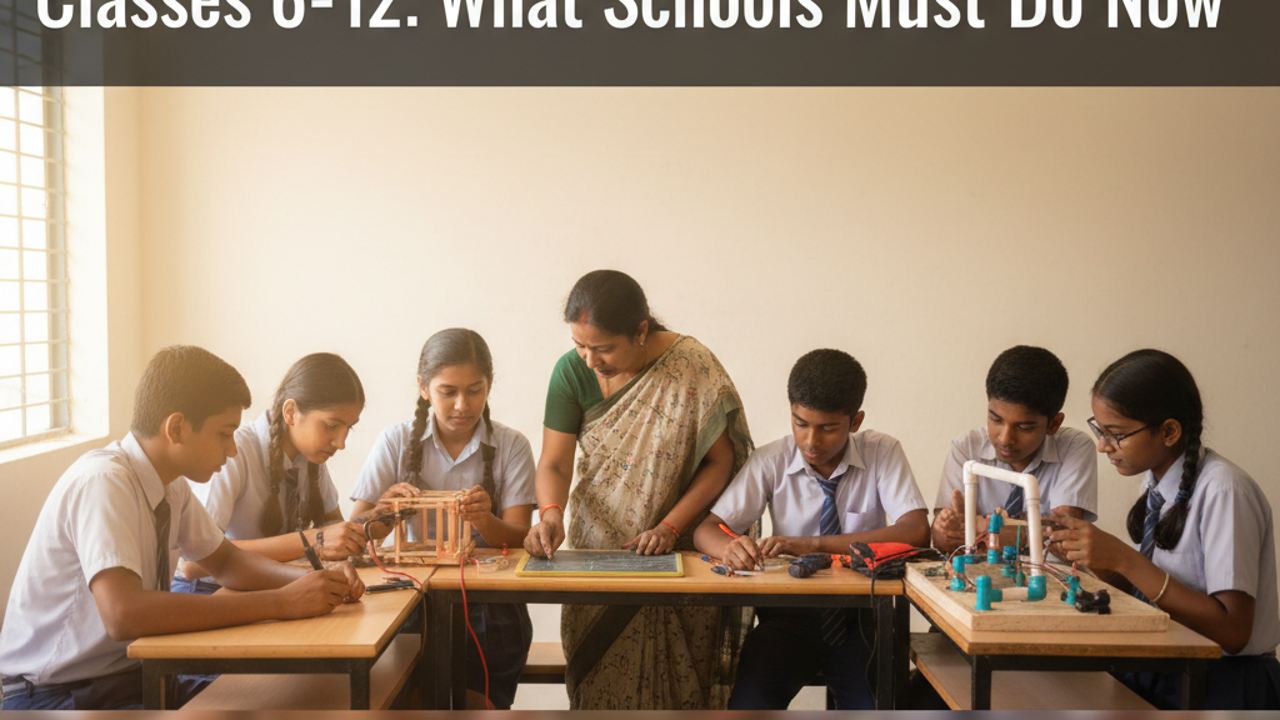
NEP 2020 mandates vocational training for Classes 6–12 and digital access for disadvantaged students — but most schools are still searching for practical, classroom-ready ways to comply. This post explains exactly what the policy requires, why social-emotional learning sits at its core, and how the ProGame SEL Module by Next Skills 360 helps schools meet those requirements without disrupting their existing timetable.
NEP 2020 does not just restructure syllabi — it places life skills, vocational readiness and digital equity at the heart of Indian schooling from Class 6 onwards. Yet for most principals and wellbeing heads, translating that policy mandate into daily classroom practice remains the hardest part. ProGame SEL Module by Next Skills 360 was built precisely for that gap.
What NEP 2020 Actually Mandates for Classes 6–12
Approved by the Union Cabinet on 29 July 2020, the National Education Policy replaced a framework that had stood since 1986. For Classes 6–12, the policy is unambiguous: schools must integrate vocational and experiential learning, embed life skills across subjects, and ensure digital access for disadvantaged learners — not as enrichment activities, but as core educational entitlements. The mandate is already hardening into compliance requirements. Under CBSE Circular Acad-15/2026 (1 April 2026), schools are required to deliver 100 hours per year of Computational Thinking and AI for Classes 6–8 from the 2026-27 academic session. Alongside coding and AI literacy, NEP explicitly calls for empathy, resilience, self-awareness and responsible decision-making to be woven into the school experience. For principals and district officials, this is no longer a future agenda. The 2026-27 session is already under way, and the question is not whether to comply — it is how.
Why Social-Emotional Learning Is Central to NEP's Vision
NEP 2020 positions social-emotional learning (SEL) as a non-negotiable outcome, not a supplementary programme. The policy calls on schools to cultivate empathy, emotional resilience, self-awareness and responsible decision-making as explicit goals — the same competencies that employers and higher-education institutions consistently cite as prerequisites for vocational and workplace readiness. This convergence of policy and employer expectation matters: a student who cannot manage peer pressure, resolve conflict constructively or regulate their emotions is not truly vocationally ready, regardless of their technical skills. The founders of Next Skills 360 bring rare domain depth to this space. Between 2014 and 2016, co-founder Suraj Meiyur authored 17 life-skills books covering child abuse, substance abuse, peer pressure and emotional resilience — the precise themes NEP now asks schools to embed. From 2016, he and co-founder Sri Sowjanya Suraj took those books into government schools across Telangana, reaching more than 120,000 students before Next Skills 360 was formally incorporated. For a deeper look at [social emotional learning in Indian schools](https://www.nextskills360.in/blog/social-emotional-learning-in-indian-schools), including curriculum frameworks and implementation approaches, the NS360 resource library is a useful starting point.
The Implementation Gap Most Schools Face
Knowing what NEP 2020 requires and being able to deliver it daily are two very different things. Most schools — private and government alike — face the same cluster of barriers: no dedicated wellbeing teacher, training budgets stretched thin, timetables already crowded with board-exam pressures, and little guidance on which materials actually work in a typical Indian classroom. The challenge is sharper in low-resource settings. According to UDISE+ 2023-24, only 57% of India's schools have working computers and only 54% have internet connectivity. A digital-access mandate that assumes connected devices simply does not reach nearly half the country's schools — or the 24.8 crore students (UDISE+ 2024-25) enrolled in them. What schools need is not more policy documentation. They need content that works with the teachers, infrastructure and timetable they already have — content that a subject teacher can pick up and deliver confidently without a specialist wellbeing qualification or a week-long training programme. Explore NS360's full [SEL curriculum for Indian schools](https://www.nextskills360.in/social-emotional-learning) to understand how structured, theme-based content can be integrated without adding to teacher workload.
How ProGame SEL Module Helps Schools Meet NEP 2020 Requirements
The ProGame SEL Module (formerly Life Skills 360) is Next Skills 360's answer to the implementation gap. It delivers social-emotional learning through story-based and activity-driven books designed for self-reflection and independent use — meaning students engage meaningfully even when a specialist teacher is not present. The module covers 50+ themes, including bullying, peer pressure, substance abuse and personal safety — mapping directly onto the life-skills outcomes NEP 2020 specifies. It develops empathy, resilience, self-awareness and responsible decision-making in a format that fits inside an existing timetable without requiring structural changes to the school day. Critically, minimal teacher training is needed. A classroom teacher can begin delivering sessions without a prior counselling background or extended orientation — directly addressing the training-budget and staffing constraints most schools face. These are not untested claims. According to Next Skills 360's own records, the company has impacted 240,000+ students across India since 2020, the majority of them in government and low-income private schools — demonstrating that this approach scales across diverse classroom contexts.
Digital Inclusion: Reaching Disadvantaged Students Under NEP 2020
NEP 2020's digital-access mandate carries a clear equity intention: no student should be excluded from 21st-century learning because of socio-economic background or geographic disadvantage. This aligns directly with Next Skills 360's stated mission — making future-ready skills accessible to all learners, especially those from underserved and marginalised communities, so that no learner is excluded because of background, physical ability or access to technology. The ProGame SEL Module is designed with this equity imperative in mind. Because the content is story-based and activity-driven, it does not depend on a computer lab, internet connection or specialist infrastructure. Schools in low-resource settings can deploy it within their existing classroom setup, using teachers who are already on staff. According to Next Skills 360's own records, the company has been deployed in 1,200+ schools across 15 Indian states, and its largest single implementation reached 34,000 students in a single district rollout in Telangana — evidence that the approach is built for scale, not just pilot environments. For schools exploring how [NEP 2020 life skills and SEL curriculum requirements intersect](https://www.nextskills360.in/blog/nep-2020-fln-how-education-policy-shapes-life-skills-in-2026), NS360's blog offers policy-aligned guidance for the 2026 context.
Practical Next Steps for Principals and Wellbeing Heads in 2026
The 2026-27 session is already running. Compliance is not a future consideration — it is a present responsibility. Here is a short, actionable checklist to move from awareness to implementation: 1. Audit your current life-skills coverage. Map what is actually being taught against NEP 2020's specified themes for Classes 6–12. Gaps are usually larger than expected. 2. Identify which classes lack structured SEL content. Unstructured assemblies and sporadic counsellor visits do not constitute a programme. 3. Evaluate solutions that require minimal teacher retraining. Solutions that demand long certification courses will stall at the budget-approval stage. 4. Pilot with a single grade first. A Class 7 or Class 8 pilot generates evidence for school-wide rollout within one term. 5. Check for scalability. Can the same solution expand to all sections and grades without a procurement bottleneck? The ProGame SEL Module is built to clear every one of these filters — and with 10,000+ trainers and educators trained across India (Next Skills 360's own records), the support infrastructure is already in place.
Frequently Asked Questions
### Does NEP 2020 make life-skills education compulsory for all classes from 6 to 12? NEP 2020 mandates the integration of vocational readiness and life skills — including empathy, resilience and responsible decision-making — as core outcomes across Classes 6–12, not optional extras. CBSE Circular Acad-15/2026 further specifies 100 hours per year of Computational Thinking and AI for Classes 6–8 from the 2026-27 session, signalling that policy expectations are now becoming hard compliance requirements. ### What is social-emotional learning and why does it matter for NEP 2020 compliance? Social-emotional learning (SEL) develops the skills students need to manage emotions, build healthy relationships and make responsible decisions. NEP 2020 explicitly names empathy, resilience and self-awareness as school outcomes. Beyond policy compliance, these are the competencies employers and higher-education institutions consistently identify as prerequisites for vocational and workplace readiness — making SEL central to the policy's vocational education agenda. ### How does ProGame SEL Module fit into a school's existing timetable without disrupting it? ProGame SEL Module is delivered through story-based and activity-driven books that any classroom teacher can use after minimal orientation — no specialist wellbeing qualification required. The content is designed to slot into existing periods rather than require new dedicated slots, making it practical for schools with already-crowded timetables and limited training budgets. ### Can ProGame SEL Module be used in schools with limited technology infrastructure? Yes. Because the module is built around printed story-based and activity-driven materials, it does not depend on computers, internet connectivity or any specialist hardware. This makes it directly suitable for the significant proportion of Indian schools that, according to UDISE+ 2023-24, lack working computers or reliable internet access. ### How many SEL themes does the ProGame SEL Module cover, and which age groups is it designed for? According to Next Skills 360's own records, the ProGame SEL Module covers 50+ themes, including bullying, peer pressure, substance abuse and personal safety. It is designed for Classes 6–12 and develops empathy, resilience, self-awareness and responsible decision-making in a format accessible to students across a wide range of learning backgrounds.
Ready to align your school with NEP 2020's life-skills mandate without disrupting your timetable? Request a free demo of ProGame SEL Module and see how 50+ SEL themes can be live in your classrooms within weeks. Visit [nextskills360.in](https://www.nextskills360.in) or write to us today.
Ready to align your school with NEP 2020's life-skills mandate without disrupting your timetable? Request a free demo of ProGame SEL Module and see how 50+ SEL themes can be live in your classrooms within weeks. Visit nextskills360.in or write to us today.