


New NCERT Textbooks Grades 1–8: What Schools Must Do Now
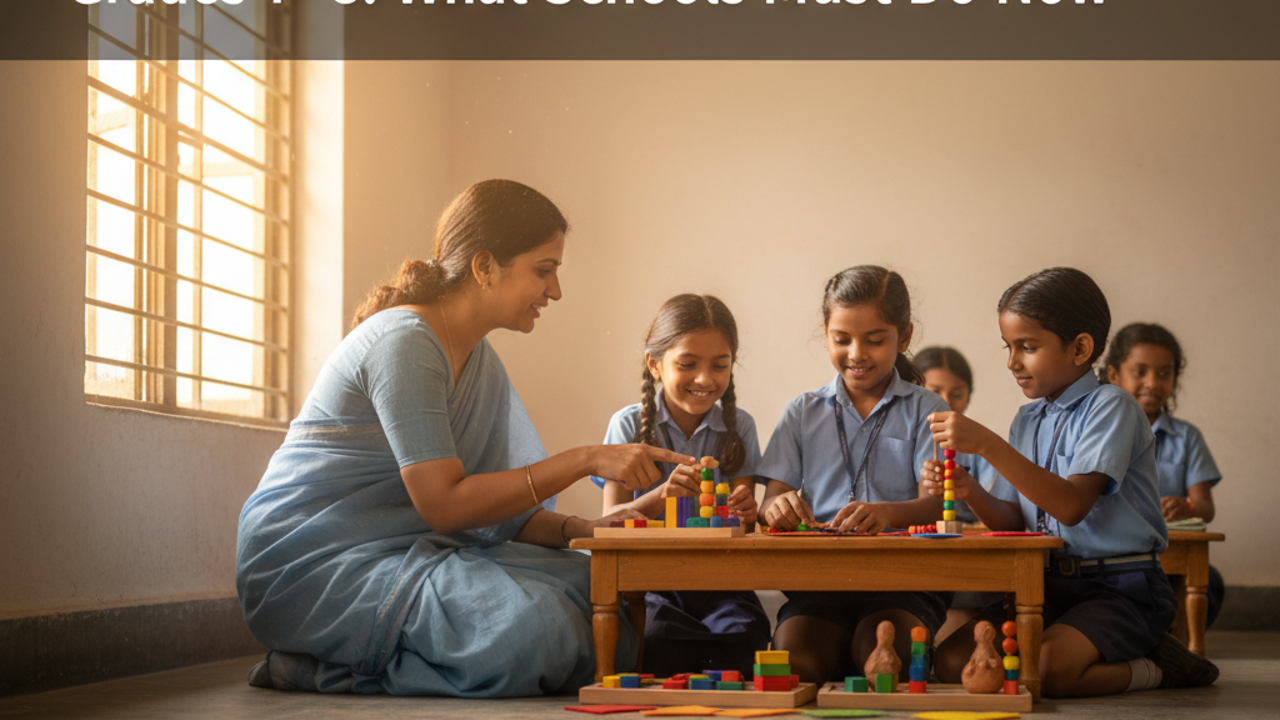
New NCERT textbooks for Grades 1–8 are now available in print and digital formats, with Grade 9 editions actively in development. For schools serving students with visual impairments, this transition creates an urgent alignment challenge — accessible materials, NCERT-mapped lesson sequences, and screen-reader-compatible platforms must all be ready before the next academic cycle begins. India's classrooms are mid-transition: new NCERT textbooks for Grades 1–8 are already in students' hands in print and digital formats, while Grade 9 editions are actively in development. For mainstream schools this means curriculum reviews; for special schools and inclusion coordinators, it means something more urgent — ensuring that students with visual impairments are not left behind when the framework shifts. ProGame Tactile Plus, NS360's browser-based, accessibility-first coding and skilling platform, was built precisely for this moment.
What the New NCERT Textbook Rollout Means for Grades 1–8 in 2026
The launch of new NCERT textbooks for Grades 1–8 in both print and digital formats marks a structural reset for Indian school education. Curriculum alignment in practice means more than new books on desks — it requires teacher guides, kit content, and lesson sequencing to be updated in step with the revised framework. Schools that delay this internal review risk instructional drift, where teachers continue delivering content anchored to the old structure while students are assessed on the new one. That gap is manageable for mainstream classrooms. For students with disabilities, it is significantly harder to close. Accessible materials — screen-reader-compatible digital editions, audio-first lesson structures, adapted assessments — take longer to produce, procure, and deploy than standard print updates. The window between a curriculum change and a school's instructional realignment is precisely where learning gaps are born. For inclusion coordinators, acting now — while Grade 9 is still in development — is the strategic advantage. For more on what this rollout means structurally, see [New NCERT Textbooks Grades 1–8: What Schools Must Know in 2026](https://www.nextskills360.in/blog/new-ncert-textbooks-grades-1-8-what-schools-must-know-in-2026).
Why Inclusive Classrooms Face a Higher Alignment Risk
India's school system serves 24.8 crore students across 14.7 lakh schools, according to UDISE+ 2024–25 data published by the Ministry of Education. Within that scale, students with visual impairments represent a population whose access to updated curriculum content depends entirely on whether digital materials have been made accessible before they reach classrooms. The alignment pressure is compounded by policy mandates arriving simultaneously. NEP 2020 requires computational thinking from Class 6 onwards, and CBSE has mandated 100 hours per year of Computational Thinking and AI for Classes 6–8 from academic year 2026–27, according to CBSE curriculum guidelines. Inclusive schools must therefore align on two fronts at once: the updated NCERT framework and the coding and AI instruction mandate. Accessible coding tools designed specifically for students with visual impairments are not a supplementary consideration — they are a compliance requirement. Schools and State Samagra Shiksha Inclusion Cells that have not yet evaluated their platforms against these twin mandates are working with a closing window. Explore [2026 Education Policy and Inclusive Coding](https://www.nextskills360.in/blog/2026-education-policy-inclusive-coding-for-visually-impaired) for a deeper policy breakdown.
ProGame Tactile Plus: Browser-Based Accessibility Built for the Updated Framework
[ProGame Tactile Plus](https://www.nextskills360.in/blog/category/progame-tactile-plus) is NS360's browser-based, accessibility-first coding and skilling platform for students with visual impairments in Classes 5 and above. It is designed for full assistive-technology navigation — every element of the learning journey is accessible via screen reader, with no reliance on sight at any point. The platform covers coding, AI literacy, social-emotional skills, career guidance, and financial literacy in a single integrated programme. Each domain maps directly to current policy priorities: coding and AI align to the CBSE computational thinking mandate and NEP 2020 requirements; social-emotional learning and career guidance reflect the holistic development strands embedded in the updated NCERT framework. What makes this especially practical during a curriculum transition is the browser-based delivery model, which removes the installation friction that stretches IT departments at the worst possible time. There is no per-device app deployment, no version management across a device fleet, and no procurement bottleneck. When a school's IT team is already managing a framework rollout, a platform that works through the browser on existing devices is not a convenience — it is a practical necessity. Content updates propagate without hardware changes, making ProGame Tactile Plus a genuinely future-proof investment.
How NS360 Keeps Kit Content and Teacher Guides Curriculum-Aligned
NS360's ability to absorb curriculum transitions without disrupting delivery comes from the structured programme infrastructure built into ProGame Tactile. Each deployment includes student licences, train-the-trainer workshops, a teacher Learning Management System, a real-time analytics dashboard, and weekly teacher engagement. This infrastructure means that when NCERT-aligned content updates are required, they reach teachers through existing channels — schools do not need to restart procurement cycles or re-negotiate partnerships. According to Next Skills 360's own records, NS360 has impacted 240,000+ students across India since 2020 and has reached 500+ students with disabilities through its inclusive skilling programmes. The ProGame Tactile three-year structured programme is currently running in four schools for the blind in Pune, with new projects commencing in Tamil Nadu and Karnataka — demonstrating the kind of long-term institutional partnership that absorbs curriculum transitions smoothly rather than treating each update as a crisis. NS360's inclusive skilling work has been covered by The Hindu Business Line, and the company's approach to coding without computers is the subject of a case study published through Harvard Business Publishing. These are not pilots — they are replicable, state-scalable deployments.
Practical Steps for Inclusion Coordinators and State Samagra Shiksha Cells
The following steps provide a concrete starting point for schools and state inclusion teams working against the new NCERT rollout timeline: 1. Audit existing digital materials for screen-reader compatibility. The new NCERT digital editions are the benchmark. Any supplementary platform that cannot be independently navigated by a student using a screen reader fails the access standard. 2. Map current coding and AI instruction to the CBSE 100-hour mandate for Classes 6–8. Identify which hours are being delivered, in which format, and whether students with visual impairments are included in that count. 3. Evaluate platform independence. Can students with visual impairments independently navigate updated lesson content, write and run code, and access career resources without sighted assistance? If not, a browser-based, audio-first solution is the gap-filler. 4. Engage NS360 for a curriculum-alignment review session before the next academic cycle begins. The cost of a proactive review is significantly lower than retrofitting access after a curriculum transition has already embedded new gaps. For a broader view of how accessible coding tools align to the updated NCERT STEM mandate, see [New NCERT Textbooks 2026: What Schools Must Do Now for STEM](https://www.nextskills360.in/blog/new-ncert-textbooks-2026-what-schools-must-do-now-for-stem).
Looking Ahead: Grade 9 in Development and the Inclusive Readiness Window
The fact that Grade 9 NCERT textbooks are actively in development is a strategic signal, not just a scheduling note. Schools that build accessible instructional infrastructure now — while Grade 9 is still being drafted — will absorb the next update without a gap. Those that wait will face the same alignment crisis twice in rapid succession. ProGame Tactile Plus is structured to grow with students. Its three progressive coding levels, combined with AI literacy, financial literacy, and career guidance, naturally extend into the secondary grades that Grade 9 will enter. Browser-based delivery means that as NCERT-aligned content is updated, it propagates to every school in the programme simultaneously — no hardware procurement, no reinstallation, no delay. For State Samagra Shiksha Inclusion Cells, this is the moment to map ProGame Tactile Plus against the current curriculum plan and build Grade 9 readiness into the next project cycle. NS360's inclusion team can conduct a structured curriculum-alignment review tailored to a school's specific grade range, disability cohort, and existing platform infrastructure. The inclusive readiness window is open — but it will not stay open indefinitely. Explore the full [ProGame Tactile programme](https://www.nextskills360.in/progame-tactile) to understand the complete structured delivery model.
Frequently Asked Questions
### What are the new NCERT textbooks for Grades 1–8 and when were they released? New NCERT textbooks for Grades 1–8 have been launched in both print and digital formats, according to ncert.nic.in. Grade 9 editions are actively in development. Schools are expected to align their instructional materials, teacher guides, and supplementary platforms to the updated framework as part of the transition. ### How does the CBSE 100-hour Computational Thinking mandate affect inclusive schools? CBSE has mandated 100 hours per year of Computational Thinking and AI for Classes 6–8 from academic year 2026–27, per CBSE curriculum guidelines. Inclusive schools serving students with visual impairments must meet this mandate using accessible, screen-reader-compatible platforms — standard coding tools are not sufficient without assistive-technology integration. ### What makes ProGame Tactile Plus different from other coding platforms for visually impaired students? ProGame Tactile Plus is a browser-based, accessibility-first platform requiring no app installation and no sighted assistance for navigation. It covers coding, AI literacy, social-emotional skills, career guidance, and financial literacy in one programme, aligned to NEP 2020 and the updated NCERT framework, for students with visual impairments in Classes 5 and above. ### Can ProGame Tactile Plus be deployed across multiple schools simultaneously? Yes. Because ProGame Tactile Plus is browser-based, content updates and deployment scale without hardware procurement cycles. NS360's structured programme model — which includes train-the-trainer workshops, a teacher LMS, and a real-time analytics dashboard — supports multi-school rollouts. NS360 has been deployed in 1,200+ schools across 15 Indian states since 2020, according to Next Skills 360's own records. ### How can a State Samagra Shiksha Inclusion Cell begin the alignment process? The recommended starting point is a curriculum-alignment review with the NS360 Inclusion Team, which maps the school's current digital materials, coding instruction hours, and platform accessibility against the new NCERT framework and CBSE mandate. NS360 offers a free review session — contact details and scheduling are available at nextskills360.in.
Is your school's inclusive curriculum ready for the new NCERT framework? Connect with the NS360 Inclusion Team today for a free curriculum-alignment review and see how ProGame Tactile Plus can close the gap — before Grade 9 lands. Visit nextskills360.in or write to us to schedule a session.
Is your school's inclusive curriculum ready for the new NCERT framework? Connect with the NS360 Inclusion Team today for a free curriculum-alignment review and see how ProGame Tactile Plus can close the gap — before Grade 9 lands. Visit nextskills360.in or write to us to schedule a session.