


CBSE & NCERT Syllabus Update 2026-27: New Class 9–10 Content
Quick answer
The CBSE & NCERT Syllabus Update 2026-27 makes Computational Thinking and Artificial Intelligence compulsory in Classes 9 and 10, extending a curriculum that now runs from Class 3 to Class 10. Schools need practical, curriculum-aligned coding tools to meet this mandate without overhauling their entire infrastructure.
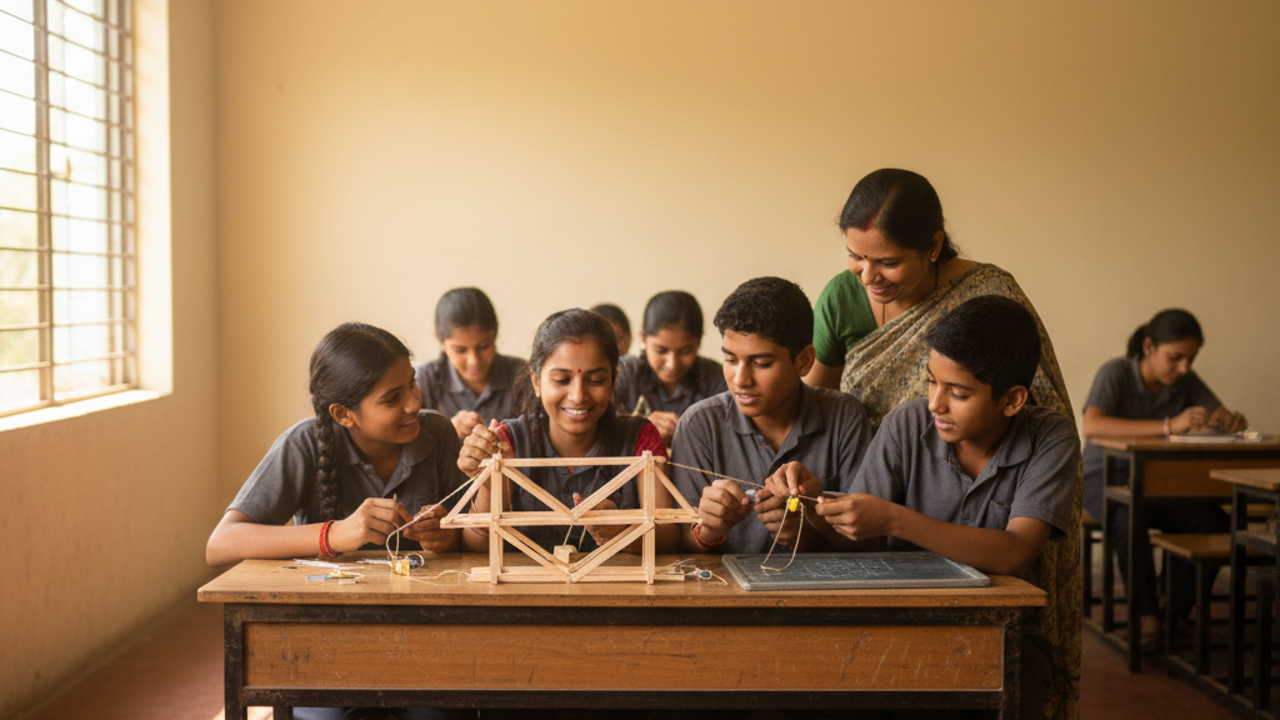
The CBSE & NCERT Syllabus Update 2026-27 makes Computational Thinking and Artificial Intelligence compulsory in Classes 9 and 10, extending a curriculum that now runs from Class 3 to Class 10. Schools need practical, curriculum-aligned coding tools to meet this mandate without overhauling their entire infrastructure.
When CBSE confirmed in Circular Acad-15/2026 that Computational Thinking and AI would be compulsory for every Class 9 and Class 10 student from the 2026-27 session, school leaders across India began asking the same question: which tools are actually mapped to the updated curriculum? The answer matters most for secondary school heads who must act before the new academic year is fully underway. ProGame Digital — Next Skills 360's offline-capable Android coding app — was built precisely for this transition.
What the CBSE & NCERT Syllabus Update 2026-27 Actually Changes for Classes 9–10
CBSE Circular Acad-15/2026, issued on 1 April 2026, marks a decisive shift: Computational Thinking and Artificial Intelligence are no longer optional enrichment activities for secondary students. They are compulsory subjects in Classes 9 and 10 across all CBSE-affiliated schools from the 2026-27 session. Combined with the existing CT and AI curriculum for Classes 3 to 8, this creates a continuous, structured progression from Class 3 to Class 10.
NCERT textbook revisions for Classes 9–10 are now aligning new content to these updated curricular frameworks, giving the mandate both policy force and instructional shape. For school principals and STEM heads, this is not a future consideration — it is a present compliance requirement. Schools that have not yet identified curriculum-aligned tools for Classes 9 and 10 are already behind the planning curve for the current academic session. For a broader look at what this means across the secondary timetable, see CBSE Curriculum 2026-27 Updated for Classes 9–12: Key Changes.
Why NEP 2020 Is the Policy Engine Behind These Revisions
The National Education Policy 2020, approved by the Union Cabinet on 29 July 2020, established computational thinking and coding education as a requirement from Class 6 onwards. CBSE Circular Acad-15/2026 goes further, anchoring CT and AI all the way through Class 10 and giving the NEP 2020 vision regulatory teeth at the secondary level.
For school principals and STEM heads, NEP 2020 alignment is now a procurement and accreditation concern, not merely a pedagogical aspiration. Inspectors, parents, and school rating frameworks are increasingly scrutinising whether a school's technology curriculum reflects the policy direction. Schools that adopted aligned coding tools early are better positioned to demonstrate compliance, satisfy parent expectations, and avoid last-minute infrastructure scrambles. Those still searching for the right solution need a tool that works within their existing constraints — not one that requires a rebuilt lab or a specialist hire. The CBSE Secondary School Curriculum 2026-27: Learning Standards Met resource outlines exactly what those standards require.
What Schools in Classes 9–10 Need Right Now to Stay Compliant
Three pain points consistently surface when secondary school leaders discuss CT and AI implementation. First, many schools lack a functional computer lab or face unreliable lab access — according to UDISE+ 2023-24, only 57% of India's schools have working computers and only 54% have internet connectivity. Second, very few Class 9–10 classroom teachers have a coding or AI background, making specialist-dependent solutions unworkable at scale. Third, patchy connectivity makes cloud-only platforms a liability.
ProGame Digital addresses all three directly. It is an Android mobile coding app with a Scratch-based drag-and-drop editor that runs offline on budget Android phones — no computer lab, no IT teacher, no reliable internet required. It is free for students on Google Play and is available in English, Hindi, Telugu, Kannada, Tamil, and Marathi, meeting the linguistic diversity of Class 9–10 classrooms across India. A gamified interface keeps secondary students engaged without requiring teacher-led facilitation at every step.
How ProGame Digital Maps to the Updated CBSE CT and AI Curriculum
ProGame Digital delivers three integrated self-learning tracks: Coding Skills, AI Skills, and the ProGame SEL Module (social-emotional learning). Embedded within the app is the ProGame AI Module, which is explicitly mapped to the CBSE Computational Thinking and AI curriculum for Classes 3 to 10 — making it directly relevant to the updated Class 9–10 content introduced under Circular Acad-15/2026. The AI Module provides 30 to 50 hours of activities per year for each class, covering data, patterns, decision-making, and applied AI concepts.
Critically, ProGame Digital includes a built-in AI Chatbot coding mentor — ProGame hAI — that gives students step-by-step guidance, hints, and debugging support even when no specialist teacher is present. This is essential for secondary schools where CT and AI is newly mandated and where subject expertise is thin. Schools with both computer labs and mobile devices can complement ProGame Digital with Skills Buddy, Next Skills 360's computer-lab skilling platform for Class 4 and above, which is also mapped to NEP 2020 and the CBSE CT and AI curriculum. ProGame Digital, however, remains the most accessible entry point for Classes 9–10 compliance.
Real Impact: NS360 Across India's Schools
For a principal making a procurement decision, implementation track record matters as much as curriculum alignment. According to Next Skills 360's own records, the company has impacted 240,000+ students since its founding in 2020, reached 1,200+ schools across India, and maintains a presence in 15 Indian states. More than 10,000 trainers and educators have been prepared to deliver NS360 programmes during that period.
That reach has been recognised externally: Next Skills 360 has received 14 national and international recognitions, including selection as an MIT Solver and receipt of the AI for Humanity Prize from the McGovern Foundation. A Harvard Business Publishing case study — Teaching Coding Without Computers (case W37092) — documents the company's model, and its inclusive skilling work has been covered by The Hindu Business Line. These markers matter when a school group technology head is evaluating a long-term curriculum partner, not just a one-off purchase. For further context on our school AI approach, visit the School AI Readiness Kit for CBSE & NEP 2020 page.
Three Steps for School Leaders to Act Before the 2026-27 Term Progresses
Step 1: Audit your current CT and AI coverage in Classes 9 and 10 against the requirements of CBSE Circular Acad-15/2026. Map what is currently being taught, by whom, and on which platform — and identify the gaps against the compulsory curriculum framework.
Step 2: Diagnose your school's primary constraint. Is it device access, teacher capacity, or connectivity? ProGame Digital resolves all three: it runs offline on budget Android phones, requires no specialist IT teacher to deliver, and is free for individual students (school programmes are priced by quote at nextskills360.in). The app is available now on Google Play.
Step 3: Pilot ProGame Digital with one Class 9 or Class 10 section before the next internal assessment cycle. Measure student engagement, lesson completion rates, and AI module activity scores. Use that data to make a confident, evidence-based case for a full school or school-chain rollout. For guidance on what a well-structured pilot looks like within the CBSE secondary framework, the AI Module for School Students India: What Works in 2026 article is a practical starting point.
Frequently Asked Questions
Is Computational Thinking and AI now compulsory for all CBSE Classes 9 and 10 students?
Yes. CBSE Circular Acad-15/2026, dated 1 April 2026, makes Computational Thinking and Artificial Intelligence compulsory in Classes 9 and 10 from the 2026-27 session. This extends an existing CT and AI curriculum that already covered Classes 3 to 8, creating a continuous programme from Class 3 to Class 10 across all CBSE-affiliated schools.
Does ProGame Digital work without a computer lab or internet connection?
Yes. ProGame Digital is an Android mobile coding app that runs offline on budget Android phones. It does not require a computer lab, a dedicated IT teacher, or a stable internet connection, making it practical for the full range of CBSE schools — including those in the nearly half of India's schools that, according to UDISE+ 2023-24, lack working computers or reliable internet access.
Which languages does ProGame Digital support for Class 9–10 students?
ProGame Digital is available in six languages: English, Hindi, Telugu, Kannada, Tamil, and Marathi. This range reflects the linguistic diversity of secondary school classrooms across India and allows students to engage with coding and AI content in a language they are most comfortable with.
How does the AI Chatbot coding mentor in ProGame Digital support students without a specialist teacher?
The built-in AI Chatbot mentor — ProGame hAI — provides step-by-step guidance, real-time query answering, hints, and debugging support personalised to each student's level. This means a Class 9 or Class 10 student can progress through CT and AI content independently, even in a school where no teacher has a coding or AI background.
Can ProGame Digital be used alongside Skills Buddy for schools that have a computer lab?
Yes. We designed ProGame Digital and Skills Buddy to complement each other. Skills Buddy is a skilling platform used on computers — with coding, AI, and social-emotional skills modules for students in Class 4 and above — and also mapped to NEP 2020 and the CBSE CT and AI curriculum. ProGame Digital extends that learning to any Android phone, so students can continue coding work across both the lab and their personal devices.
Ready to align your Classes 9–10 coding programme with the CBSE & NCERT Syllabus Update 2026-27? Download ProGame Digital free from Google Play or visit nextskills360.in to request a school programme quote.
Ready to align your Classes 9–10 coding programme with the CBSE & NCERT Syllabus Update 2026-27? Download ProGame Digital free from Google Play or visit nextskills360.in to request a school programme quote.