


Experiential Learning Kits India Schools Need for SEL in 2026
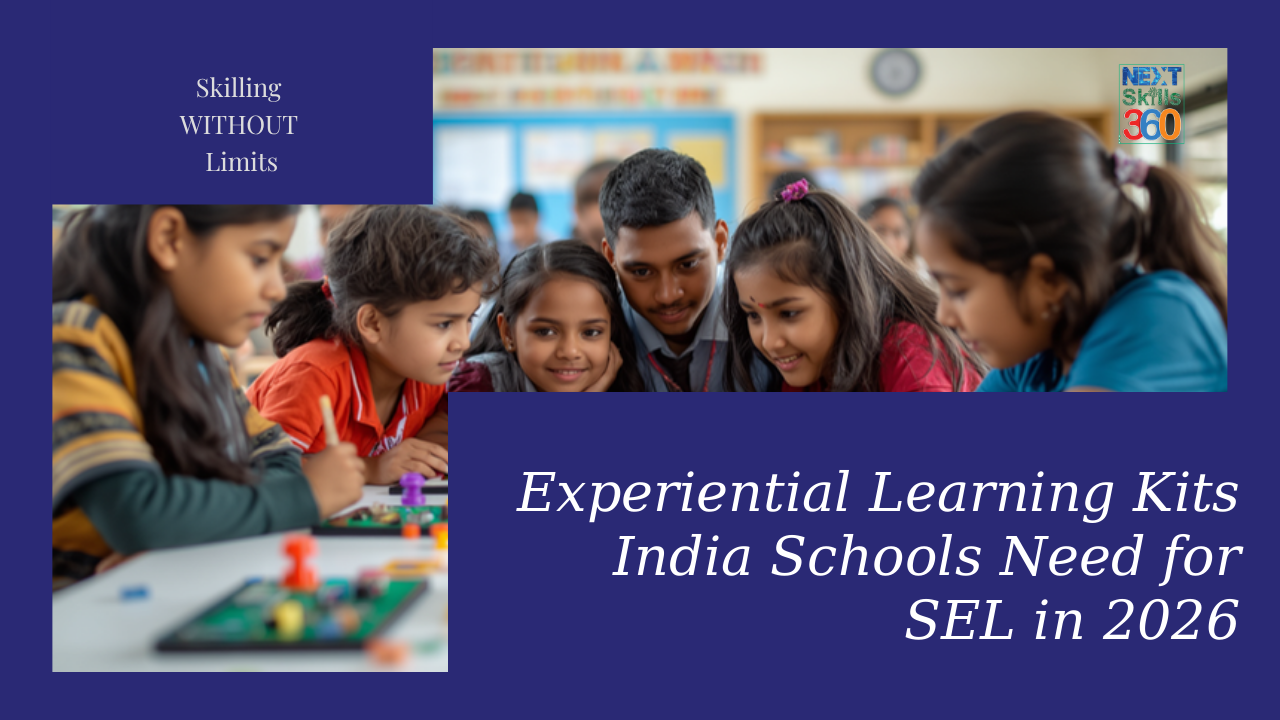
# Experiential Learning Kits India Schools Need for SEL in 2026 India's classrooms are facing a silent crisis — students navigating bullying, peer pressure, and emotional overwhelm with little structured support. NEP 2020 has made life skills a policy priority, yet most schools still lack a ready, teacher-friendly way to deliver Social Emotional Learning at scale. Experiential learning kits designed for Indian schools are closing that gap, and the results are reshaping how wellbeing is taught from Class 1 to Class 12.
Why Social Emotional Learning Can No Longer Wait in Indian Schools
India's school system serves 24.8 crore students across 14.7 lakh schools (UDISE+ 2024-25) — one of the largest and most diverse education ecosystems in the world. Delivering meaningful Social Emotional Learning at that scale is not a counsellor-led luxury; it is a policy imperative. NEP 2020 explicitly places holistic development, emotional resilience, and life skills at the heart of quality education — not as enrichment activities, but as foundational learning outcomes. Yet the mental health conversation in Indian K-12 education has far outpaced the infrastructure to support it. Most schools lack trained counsellors in every section, dedicated wellbeing budgets, or the bandwidth to build SEL programmes from scratch. What schools urgently need are structured, low-infrastructure, teacher-friendly solutions that can reach every classroom — urban and rural, private and government — without depending on devices, internet connectivity, or extensive professional development. Scalable experiential learning kits are precisely that answer.
What Makes a Learning Kit Truly 'Experiential' for SEL?
Not all SEL content is created equal. Watching a video on bullying or listening to a lecture on peer pressure delivers information — but information alone rarely changes behaviour. Genuine experiential learning places the student at the centre, prompting them to engage personally with a theme rather than observe it from a distance. True experiential SEL kits use story immersion, self-reflection activities, role play scenarios, and theme-based journaling to create a personal emotional connection. When a student reads a relatable story about navigating peer pressure and then works through structured reflection questions, they are not recalling a fact — they are processing an experience. That distinction matters enormously for lasting behavioural change. Research consistently shows that activity-driven, story-based formats produce stronger SEL outcomes than passive content delivery because they activate empathy, personal memory, and moral reasoning simultaneously. For Indian schools, where class sizes are large and teacher bandwidth is stretched, this self-directed engagement model is also practically sustainable — students can move through material meaningfully without constant facilitation.
ProGame SEL Module: 50+ Themes, Story-Led, and Ready to Deploy
NS360's ProGame SEL Module is built specifically to address the SEL delivery gap in Indian schools. Its format is story-based and activity-driven — delivered through structured books that guide students through personal reflection, scenario exploration, and skill-building exercises without requiring digital infrastructure or specialist facilitation. The module covers 50+ themes spanning the full spectrum of adolescent social-emotional challenges: bullying, peer pressure, substance abuse, personal safety, resilience, empathy, conflict resolution, and more. Because the design prioritises self-reflection and independent use, students engage meaningfully even when teacher facilitation is light — making it genuinely viable for schools with limited professional development budgets. Minimal teacher training is required, which matters a great deal for schools managing dozens of sections across multiple grades. This isn't a pilot-only solution — NS360 has already impacted 240,000+ students across India since 2020 and deployed programmes across 1,200+ schools in 15 Indian states, demonstrating that story-led, activity-driven SEL can work at genuine national scale.
How Schools Are Integrating SEL Kits Without Disrupting Timetables
One of the most common concerns school principals raise is a practical one: where does SEL actually fit? Academic timetables are already crowded, and adding another subject can feel impossible. The good news is that experiential SEL kits are inherently flexible. Schools are successfully integrating the ProGame SEL Module through several models: dedicated wellbeing periods built into the weekly timetable, homeroom or morning assembly integration where a theme-based story opens the day, library self-use sessions where students work independently, and after-school wellbeing clubs for deeper engagement. Because the module is designed for self-reflection and independent use, it does not demand a trained counsellor at every session — a class teacher can guide the process after a straightforward orientation. For schools that want a more structured rollout, NS360's support infrastructure is substantial. The company has trained 10,000+ educators across India since 2020, meaning schools can access facilitated onboarding, teacher orientation, and implementation guidance — without being dependent on it for day-to-day delivery.
Aligning SEL Kits with NEP 2020 and CBSE Life Skills Requirements
NEP 2020 is unambiguous: holistic development, socio-emotional competencies, and life skills are core learning outcomes, not optional enrichment. The policy explicitly calls for schools to nurture critical thinking, communication, collaboration, and emotional resilience — qualities that cannot be assessed through rote recall alone. CBSE's updated frameworks increasingly embed life skills within curriculum design from the early classes onwards, reinforcing the expectation that schools deliver structured, progressive SEL experiences. For school chains managing dozens of campuses and state education departments responsible for NEP 2020 implementation at scale, compliance requires more than intent — it requires an audit-ready, curriculum-aligned programme. The ProGame SEL Module's 50+ themes map directly to NEP 2020's life skills competencies, giving institutions a coherent, documented approach to holistic development rather than a piecemeal assembly of activities. For district and state officials evaluating system-wide rollout, this alignment transforms SEL from an aspiration into a measurable outcome within existing policy frameworks.
Choosing the Right Experiential SEL Kit: A Quick Checklist for School Leaders
When evaluating experiential learning kits for SEL in Indian schools, school principals and wellbeing heads should apply a clear framework: - Breadth of themes: Does the kit address the real social-emotional challenges Indian adolescents face — bullying, peer pressure, substance abuse, personal safety, resilience? - Self-guided design: Can students engage meaningfully without a specialist counsellor present for every session? - Scalability: Can it be deployed across multiple sections, grades, and campuses simultaneously without logistical bottlenecks? - NEP 2020 alignment: Is the content mapped to life skills competencies and curriculum requirements? - Verified track record: Does the provider have demonstrable outcomes in Indian schools — not just pilots? ProGame SEL Module meets each of these criteria with evidence to support it. NS360's credibility extends beyond school deployment — the company's recognitions include the MIT Solver programme, the AI for Humanity Prize (McGovern Foundation), and 12 further national and international awards, reflecting a consistent standard of innovation and impact in the Indian EdTech landscape.
Ready to bring structured, story-led Social Emotional Learning to every classroom in your school? Request a free demo of the ProGame SEL Module and see how NS360 has already impacted 240,000+ students across India. Visit nextskills360.in or speak to our school solutions team today.
Ready to bring structured, story-led Social Emotional Learning to every classroom in your school? Request a free demo of the ProGame SEL Module and see how NS360 has already impacted 240,000+ students across India. Visit nextskills360.in or speak to our school solutions team today.