


Offline Digital Learning for Rural Indian Schools in 2026
Quick answer
Discover how offline digital learning for rural Indian schools is becoming a reality in 2026 with audio-first, screen-reader-friendly skilling programmes for visually impaired students. Offline digital learning for rural Indian schools is no longer a distant aspiration — in 2026, it is a policy imperative.
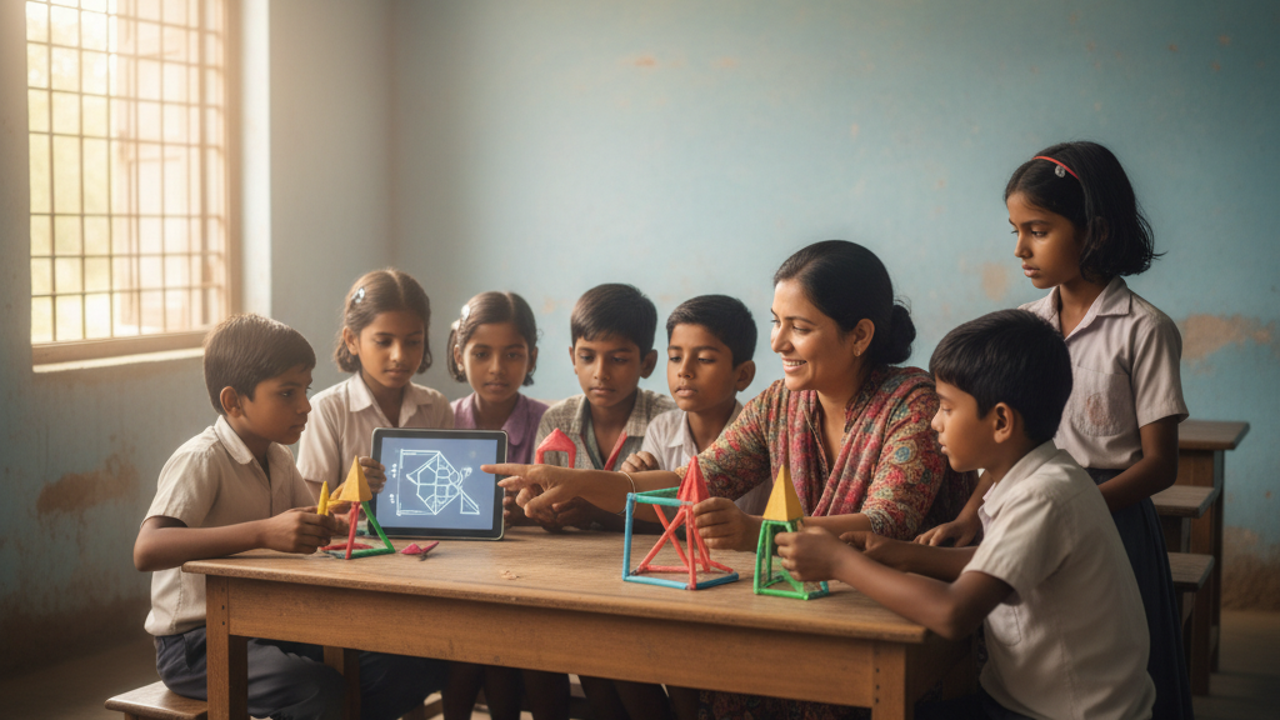
Offline digital learning for rural Indian schools is no longer a distant aspiration — in 2026, it is a policy imperative. Yet millions of students, particularly those with visual impairments in special schools, remain excluded from every mainstream EdTech solution. ProGame Tactile by Next Skills 360 is India's first audio-first skilling super app, working fully offline on any Android device, purpose-built to close that gap. Across India's 14.7 lakh schools and 24.8 crore school students, as recorded by UDISE+ 2024-25, millions of students learn in classrooms where internet connectivity is unreliable, computer labs are absent, and students with visual impairments are often left entirely outside the digital skilling conversation. In 2026, the question is no longer whether offline digital learning for rural Indian schools is possible — it is how to make it genuinely inclusive from day one. ProGame Tactile by NextSkills360 answers that question with India's first audio-first skilling super app, designed to work offline on any Android device and built specifically for students with visual impairments.
Why Offline Capability Is Non-Negotiable for Rural and Special Schools in India
India's school education system is one of the largest in the world. According to UDISE+ 2024-25, it spans 14.7 lakh schools and 24.8 crore students. Yet UDISE+ 2023-24 data reveals that only 57% of schools have working computers and only 54% have internet connectivity — meaning nearly half of all schools cannot access device-dependent digital learning programmes. For rural government schools and special schools for students with visual impairments, this connectivity gap is compounded by a near-total absence of accessible digital tools. NEP 2020, approved by the Union Cabinet in July 2020, mandates computational thinking and coding from Class 6. CBSE's Circular Acad-15/2026 further mandates 100 hours per year of Computational Thinking and AI for Classes 6 to 8 from the 2026-27 academic session. Solutions requiring a computer lab or stable broadband do not just underserve these schools — they exclude them entirely.
The Inclusion Gap: How Students With Visual Impairments Are Left Behind by Mainstream EdTech
Most digital learning platforms — even those with offline modes — are designed visually first. Interfaces rely on colour contrast, icon navigation, and drag-and-drop interactions that screen readers cannot parse. For students with visual impairments, this makes the platform effectively unusable from the very first screen. The pain points extend beyond inaccessible interfaces. Study materials shared over WhatsApp — the default workaround in most special schools — are buried in scrolling threads, unnavigable by screen reader, and lost permanently when a phone is replaced. There is no structured skilling pathway: students may access rote academic content, but coding, AI literacy, financial literacy, and career guidance remain completely out of reach. This is not a fringe issue. Samagra Shiksha, the Government of India's integrated school education scheme launched in 2018-19, includes a dedicated inclusive-education component covering all children with disabilities listed under the Rights of Persons with Disabilities Act 2016. Yet [audio-first digital skilling tools built specifically for this cohort](https://www.nextskills360.in/coding-for-visually-impaired) are virtually non-existent in India.
ProGame Tactile: India's First Audio-First Skilling Super App for Students With Visual Impairments
[ProGame Tactile](https://www.nextskills360.in/code-buddy-visually-impaired) is India's first audio-first skilling super app for students with visual impairments — fully screen-reader friendly, with no reliance on sight, and no requirement for internet connectivity or a computer lab. It runs offline on any Android device, making it deployable across the most infrastructure-constrained rural and special schools. The app covers five domains in a single learning journey: computational thinking and coding, AI literacy, social-emotional skills, financial literacy, and career guidance. It includes 40+ audio lessons, 20+ guided activities, technology podcasts, and native-language audio tutorials across six languages — Telugu, Hindi, English, Marathi, Kannada, and Tamil. An optional low-vision interface extends access further. At its core is a first-of-its-kind accessible Code Editor that allows students with visual impairments to write, run, and share their own programs entirely through audio. According to Next Skills 360's own records, 70%+ of students independently create and share their own programs. A lifetime document repository permanently stores teacher- and student-uploaded materials, navigable by screen reader — replacing the inaccessible, file-burying reality of WhatsApp.
A Structured Three-Year Programme, Not a Licence Drop
ProGame Tactile is delivered as a structured three-year programme, not a one-time licence drop — a fundamental differentiator in a market where EdTech tools frequently disengage after onboarding. Each year carries six months of structured learning. Year 1 covers coding Level 1 and social-emotional skills. Year 2 introduces coding Level 2 and foundational AI. Year 3 completes the journey with coding Level 3, financial literacy, and career guidance. Every programme includes student licences, train-the-trainer workshops, a teacher LMS, a real-time analytics dashboard, Android smartphones placed in schools for shared access, career-guidance sessions featuring role models who are blind, a closing coding hackathon, and both baseline and endline assessments — with weekly teacher engagement throughout. According to Next Skills 360's own records, 500+ students with visual impairments have been trained to date. A three-year programme is currently running across four schools for the blind in Pune, where 330 students were trained in 2025 alone. A new three-year project is commencing in Tamil Nadu, and a one-year project is under way in Karnataka.
How Samagra Shiksha and CSR Partners Can Deploy Offline Inclusive Skilling at Scale
ProGame Tactile's offline-first, any-Android-device architecture removes the infrastructure barriers that most large-scale government deployments stumble against. There is no server to procure, no computer lab to build, and no per-child device requirement — only a shared Android smartphone per school and a trained teacher. This architecture aligns directly with Samagra Shiksha's inclusive-education mandate and NEP 2020's skilling goals. The programme's structured delivery model — with weekly teacher engagement, a real-time analytics dashboard, and formal baseline and endline assessments — satisfies the accountability and reporting requirements that both government bodies and CSR funders routinely demand. Next Skills 360 brings institutional credibility at scale: a presence across 15 Indian states, 1,200+ schools reached, and 14 national and international recognitions, including selection as an MIT Solver, the AI for Humanity Prize from the McGovern Foundation, and the ElevatED Award from Dell Technologies India and MeitY. Partners include Infosys Foundation, UNICEF India, Cognizant, Nanhi Kali, and Tata Trusts' Kalike programme, among more than 80 organisations. For state education officials and [CSR teams seeking inclusive offline digital skilling at scale](https://www.nextskills360.in/ai-visually-impaired), these credentials reduce deployment risk significantly.
Making Offline Digital Learning Truly Inclusive: What Schools Should Look For in 2026
As CBSE's CT and AI mandate takes effect from 2026-27, school leaders, state officials, and CSR partners face an urgent procurement question. A practical checklist helps separate genuine solutions from inaccessible ones — and it is worth asking each question plainly. Does it work without internet on low-cost Android devices? Half of India's schools lack reliable connectivity, per UDISE+ 2023-24. Offline-first is not optional. Is it screen-reader compatible and audio-first? Any solution that requires sight to navigate excludes students with visual impairments from the first screen. Does it cover skilling domains beyond basic coding? Futures-ready students need AI literacy, financial literacy, social-emotional skills, and career guidance — not coding alone. Does it include structured teacher support? A student app without teacher training and a teacher LMS does not sustain learning in under-resourced schools. Is there a multi-year structured pathway? Single-year licences do not build durable skills. A [three-year inclusive coding programme](https://www.nextskills360.in/blog/inclusive-coding-education-for-underserved-rural-schools-2026) with assessments does. Does it provide data and analytics for accountability? Government and CSR funders need evidence of impact, not anecdote. ProGame Tactile meets every criterion. With policy mandates already live, the window to embed genuinely inclusive offline digital learning into school systems across India is open — and narrowing.
Frequently Asked Questions
### What makes ProGame Tactile different from other offline learning apps for rural schools? ProGame Tactile is audio-first and fully screen-reader friendly — it requires no sight to navigate. It works offline on any Android device, covers five skilling domains in one journey, and is delivered as a structured three-year programme with teacher training, analytics, and assessments. Most offline apps are built visually and provide a licence without ongoing programmatic support. ### Which languages does ProGame Tactile support? According to Next Skills 360's own records, ProGame Tactile delivers native-language audio tutorials in six languages: Telugu, Hindi, English, Marathi, Kannada, and Tamil — making it accessible to students across multiple states without language being a barrier to learning. ### Does ProGame Tactile require Braille or specialist hardware? No. According to Next Skills 360's own records, ProGame Tactile does not use Braille and requires no specialist hardware. It runs on a shared Android smartphone, making it deployable in any school without additional procurement or laboratory infrastructure. ### How does ProGame Tactile align with NEP 2020 and CBSE's 2026-27 CT and AI mandate? NEP 2020 mandates computational thinking from Class 6. CBSE's Circular Acad-15/2026 mandates 100 hours per year of CT and AI for Classes 6 to 8 from 2026-27. ProGame Tactile delivers computational thinking, coding, and AI literacy as core programme domains — making it directly aligned with both policy frameworks for students with visual impairments. ### How can a Samagra Shiksha Inclusion Cell or CSR partner start a ProGame Tactile deployment? Next Skills 360 begins every engagement with a free programme walkthrough, followed by a paid pilot. The team can be reached at nextskills360.in, by WhatsApp at +91 79955 60306, or by phone at +91 79892 37476. Every programme is priced by a tailored quote based on school count, student numbers, and programme duration.
If you are a state education official, Samagra Shiksha inclusion cell, or CSR partner looking to bring structured, offline, audio-first digital skilling to schools for the visually impaired, connect with the NextSkills360 team today to learn how ProGame Tactile can be deployed in your schools — visit nextskills360.in or write to us to schedule a programme walkthrough.
If you are a state education official, Samagra Shiksha inclusion cell, or CSR partner looking to bring structured, offline, audio-first digital skilling to schools for the visually impaired, connect with the NextSkills360 team today to learn how ProGame Tactile can be deployed in your schools — visit nextskills360.in or write to us to schedule a programme walkthrough.